Category Archives: Protection

Indian Point NRC Hearing – raise your voice to shut it down

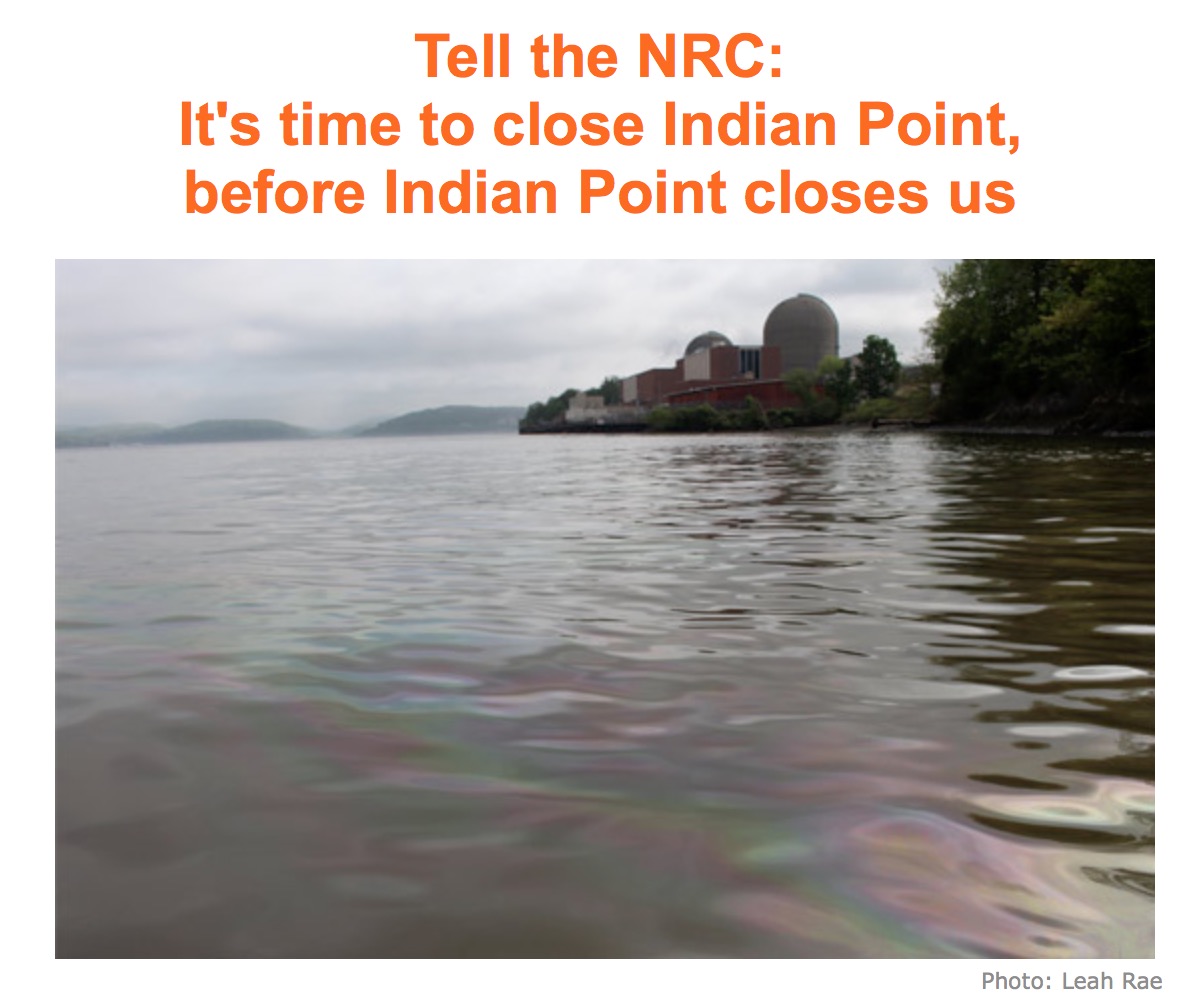
Indian Point may kill usEarlier this month, a transformer fire at Indian Point resulted in a notable oil spill on the Hudson River and even more worrisome questions about the safety of the aging nuclear power plant. Riverkeeper patrolled the Hudson near Indian Point soon after the fire, and found an oil sheen and notable odor. But Indian Point’s operators, Entergy, are claiming that there wasn’t a spill at all.

Come out and voice your concerns about Indian Point. We need to show NRC that there’s strength in numbers.

Nuclear Regulatory Commission (NRC)
Regulatory Performance Public Meeting on Indian Point
Wed 20 May 2015: 6-9 PM
Westchester Marriott
670 White Plains Road, Tarrytown, NY

SCHEDULE
6-7 PM: Open house with NRC staff to answer questions from the public about Entergy’s performance at Indian Point during calendar year 2013, and discuss issues or concerns.

7-9 PM: Question and answer session with NRC, during which members of the public can ask questions or make statements. Time for individual comments at the meeting may be limited to accommodate as many speakers as possible.

An audio recording and transcript of the meeting will be available on the NRC website at a later date.

Background on the NRC Public Meeting on Indian Point

The unfortunate case of the disappearing Black farmer

dad-john-fredwatkins
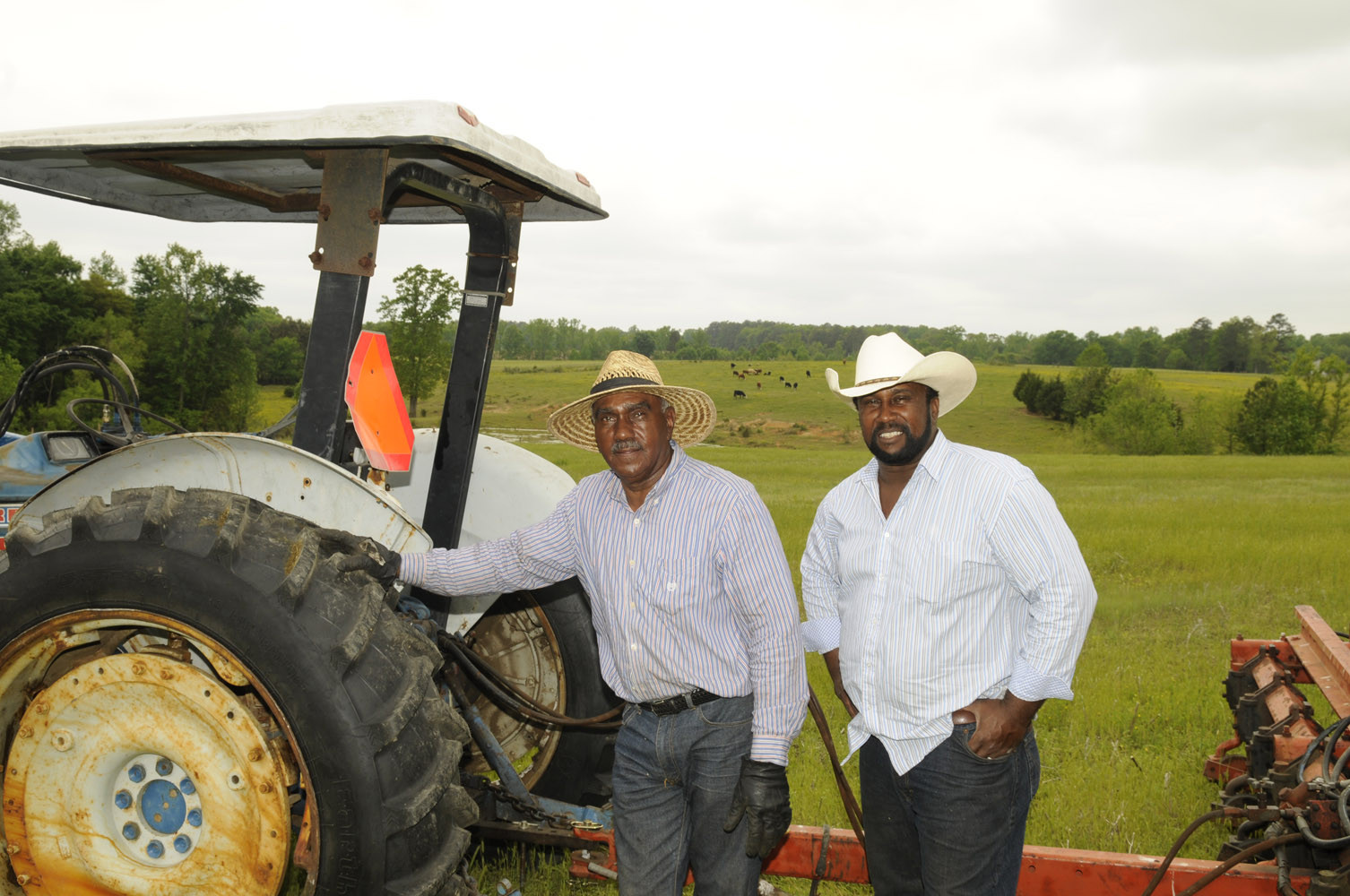
John Boyd was interviewed by Grist writer Madeleine Thomas on the state of Black farmers in America. Mr. Boyd has been a driving force in the movement to procure support for Black farmers – and even funding to help cover the personal and community cost of Black farmers being denied USDA support that was made readily available to Caucasians.

Boyd’s work helped spark a landmark legal case in 1997. In the class-action lawsuit Pigford v. Glickman, 400 black farmers alleged that the United States Department of Agriculture had denied them loans based on racial discrimination. The decision eventually awarded thousands of black farmers payments up to $50,000 for discrimination claims. In 2010, President Obama announced an additional $1.25 billion settlement, known as Pigford II, to fund any additional unfiled claims. Native American, female, and Latino farmers were also eventually awarded similar settlements, too.

…What has happened is that a lot of family farms have been left to the next generation, and they’re really not set up to continue farming. That has created a huge challenge for black people in this country as far as being agriculturalists and maintaining and contributing to America’s fabric, which is why black people were brought into this country in the first place. We were brought to this country to work the land and we’ve done it for hundreds of years for scot-free. Here we are hundreds of years later, barely holding on here.

Mr. Boyd advises taking back control over our connection to land and food by investing in back gardening, small scale farming and even larger scale farming. On the particular subject of land, he shares this wisdom:

We need people to become concerned that God doesn’t make any more land. They make a new Cadillac and a new Mercedes-Benz every day, but the actual land, once it gets away from you and your family loses that land, it’s very difficult to go back and buy it from a white farmer because they’re not going to sell it back to you. We can’t continue to give our land away for pennies on the dollar and move to suburbs and condominiums. That’s a real problem.

…As my grandfather said, “I can’t leave my PhD to my children, but I can leave my raggedy farm to them.”

Free EPA webinars on safe chemical waste disposal

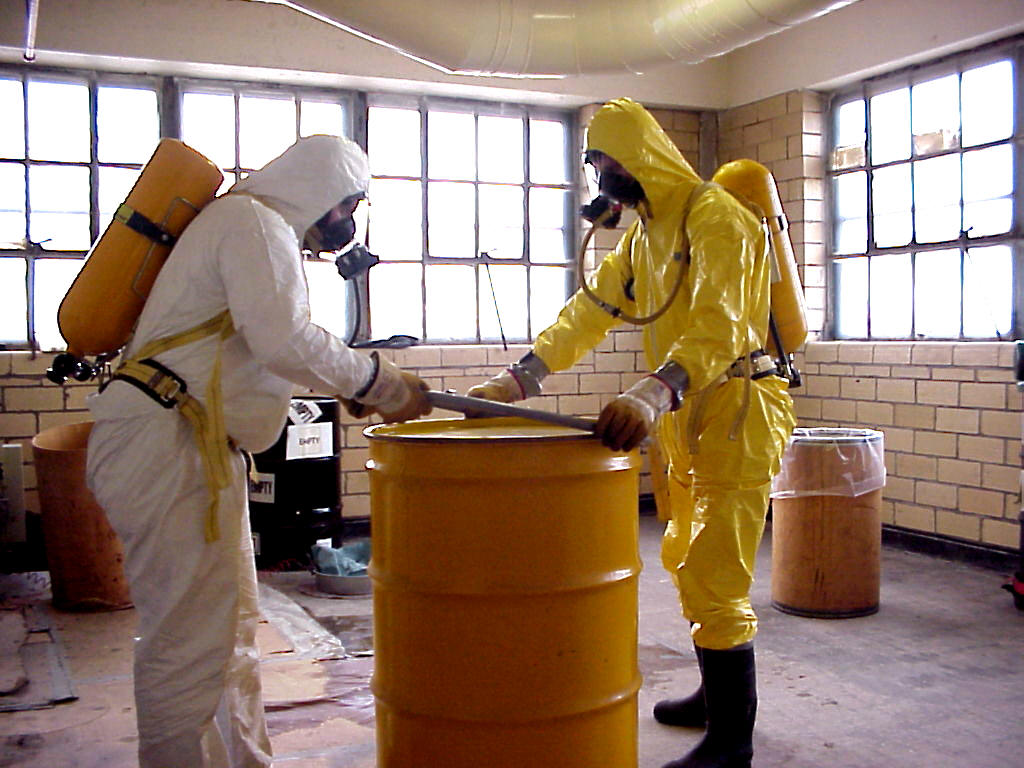
Chemical disposalWe should all be aware by now that many of the chemicals we use are poisonous. Bottle labels from pesticides to paint thinners carry skull-and-crossbones and “dispose of properly” warnings. Repair facilities and manufacturing businesses work with many dangerous chemicals that, obviously, need to be discarded after use.

The United States Environmental Protection Agency (EPA)’s job is protecting the environment in which we all live, work, and play. This charge includes regulating the manufacture, handling, and disposal of useful but dangerous chemicals. President Clinton’s executive order in 1994 made environmental justice part of the EPA mission. The EPA Web site explains:

Environmental Justice is the fair treatment and meaningful involvement of all people regardless of race, color, national origin, or income with respect to the development, implementation, and enforcement of environmental laws, regulations, and policies. EPA has this goal for all communities and persons across this Nation. It will be achieved when everyone enjoys the same degree of protection from environmental and health hazards and equal access to the decision-making process to have a healthy environment in which to live, learn, and work.

The EPA is holding two webinars this month on reducing the risks of the use of chemicals that are recognized as having a high impact on environmental justice communities.

You must register to attend EPA webinars. Registrants have the option of just listening in but can also ask a question, share information or make a statement.

Environmental Justice Public Consultation on trichloroethylene (TCE) Webinar
Date: 27 May 2015
Time: 1-2pm EDT
Register

Environmental Justice Public Consultation on paint removers NMP and methylene chloride Webinar
Date: 27 May 2015
Time: 1-2pm EDT
Register

Big Ag and its destruction called ‘conventional’ farming to hide the truth

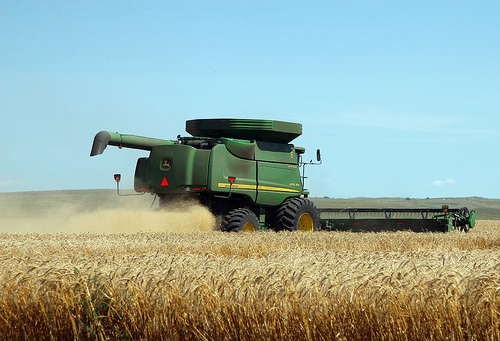
farming for profitConventional farming is Big Ag’s planned destruction of human and natural food systems. It includes GMOs, patented seeds, silent forests, animals that are tortured for years before being slaughtered, one more India farmer that will commit suicide 30 minutes from now and many other very scary things. Conventional seems like such an innocent word: conjures up thoughts of conventional wisdom, societal conventions which are the underpinning of civilization … but this word, like our food system, has been corrupted by Big Money and their lapdogs, the major media portals, to confound and confuse us, and to obfuscate the truth. L.E.A.F. explains:

Conventional farming systems share many characteristics: rapid technological innovation; large capital investments in order to apply production and management technology; large-scale farms; single crops/row crops grown continuously over many seasons; uniform high-yield hybrid crops; extensive use of pesticides, fertilizers, and external energy inputs; high labor efficiency; and dependency on agribusiness. In the case of livestock, most production comes from confined, concentrated systems.

Philosophical underpinnings of industrial agriculture include assumptions that “a) nature is a competitor to be overcome; b) progress requires unending evolution of larger farms and depopulation of farm communities; c) progress is measured primarily by increased material consumption; d) efficiency is measured by looking at the bottom line; and e) science is an unbiased enterprise driven by natural forces to produce social good.” [Karl N. Stauber et al., “The Promise of Sustainable Agriculture,” in Planting the Future: Developing an Agriculture that Sustains Land and Community, Elizabeth Ann R. Bird, Gordon L. Bultena, and John C. Gardner, editors (Ames: Iowa State University Press, 1995)

When it’s good food you crave to feed to your families, look to traditional or family farming – and organics. Although take care with organics, as in recent years that industry has been steadily encroached upon by Big Ag too.

GMOs are a fraud the US and Africa must resist believing in, using

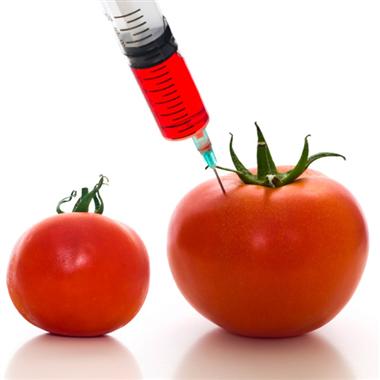
GMOd tomatoesNational Geographic writer Simon Worrall has nothing good to say about GMOs and plenty of cautions about following what has become conventional wisdom in the agri-business food industry. BTW, when did we start to refer to frankenscience by the term ‘conventional‘?

Monsanto was driven out of England after widespread protests against seed trials. Why are the Europeans so much more critical of GMOs?

Because Europeans have been better informed of the facts. The media in Europe, up to a few years ago, reported this scientific controversy fairly. People knew many well-credentialed scientists did not agree with the claim that these foods were safe. Adverse research showing harm to lab animals got publicized. As a result, European citizens made it clear they didn’t want these foods. Here, the media has not reported the controversy fairly. They’ve almost always presented the pro-GMO side. As a result, the American public has been systematically deceived…

Only if there were not risks that might impact health in ways we don’t yet know. As I said, when it comes to food safety, benefits should not be considered in offsetting risks. Everybody has to eat food and changes to food should not entail new risks, no matter what the purported benefits. Several studies by the UN and World Bank also concluded that genetic engineering is not needed to meet the world’s food needs. One of the directors of these studies was asked, “What role do you see for GMOs in the future of food?” He said, “Actually none. They aren’t needed. They haven’t been boosting yields. Small scale, agro-ecological methods are what’s needed in the Third World.”

Worrall believes in small holding farming, especially in Africa which is just beginning to experience the destruction of GMOs:

What would you say to an African farmer who wants to use GMOs to feed his starving child today rather than worry about an imaginary threat tomorrow?

First I would say: Read what the UN and World Bank-sponsored reports have said. You don’t need GMOs … there are solutions that do not rely on GMOs, which have been proven to work in Africa. So I would say: Get with the sound science, spend less money, and solve your food problem in a way that will create healthy soil, a healthy family and a healthy Africa.

Cute polar bear app helps you control your daily energy use

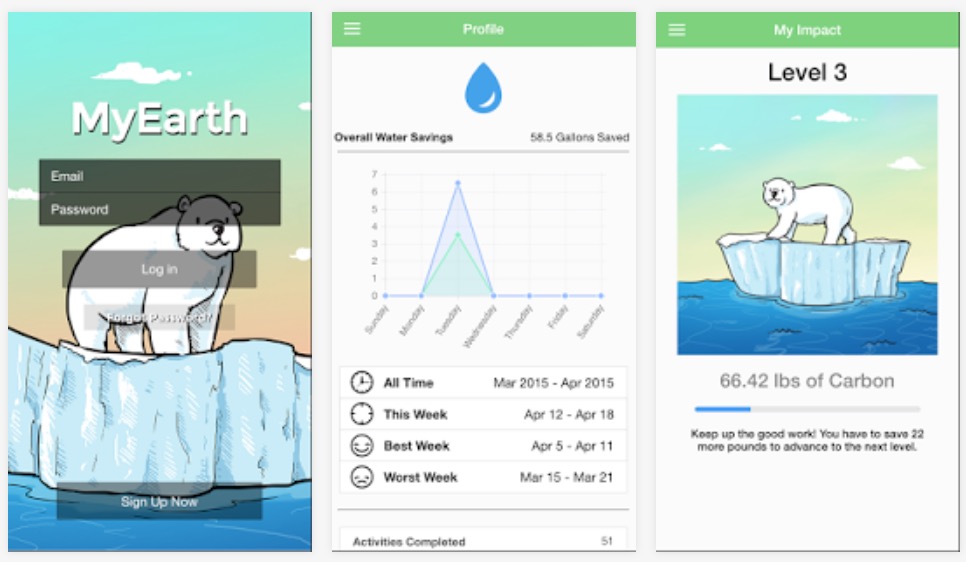
Screen Shot 2015-05-03 at 12.31.00 PMTime recommends using this cute app to track your energy use helps you learn how much energy you’re consuming and the adjustments you can make to evolve a more eco-friendly lifestyle. If you’re good, the polar bear’s iceberg gets bigger.

The app tracks your energy consumption in areas like electricity, travel and food, and within each category, there are suggestions for doing things differently to help conserve energy. Some of the suggestions are simple (like recycling) and some are complex (like installing a high-efficiency water closet). As you take up the suggestions, you accumulate carbon units and can quickly see how much energy you are saving.

A cute visual device — a polar bear perched on an iceberg — depicts your progress. The more energy you save, the bigger the iceberg gets.

Get the free app on Google Play or iTunes

Want your tax dollars spent to kill 2.7 million wild animals again this year?

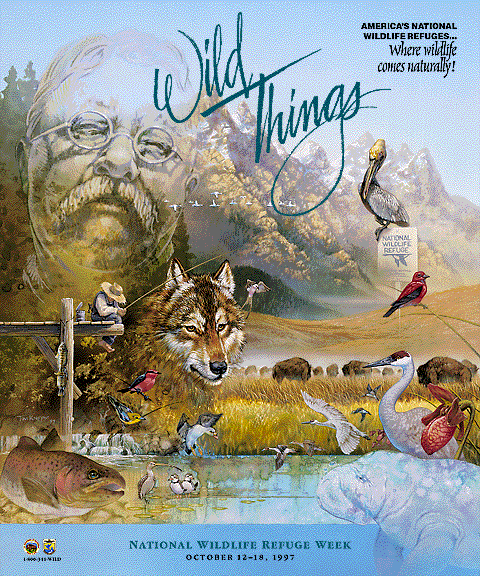
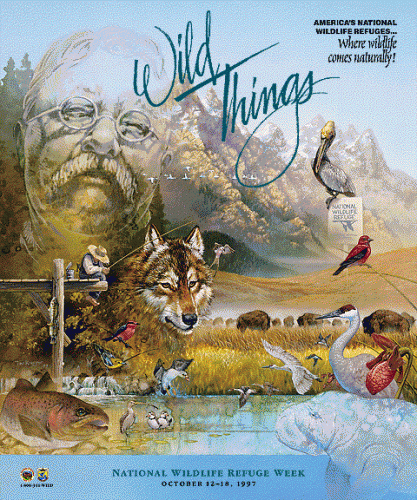
refugeweek97-with TrumanNew data from the highly secretive arm of the U.S. Agriculture Department known as Wildlife Services reveals it killed more than 2.7 million animals during fiscal year 2014, including wolves, coyotes, bears, mountain lions, beavers, foxes, eagles and other animals deemed pests by powerful agricultural, livestock and other special interests.

Despite increasing calls for reform after the program killed more than 4 million animals in 2013, the latest kill report indicates the reckless slaughter of wildlife continues, including 322 gray wolves, 61,702 coyotes, 580 black bears, 305 mountain lions, 796 bobcats, 454 river otters, 2,930 foxes, three bald eagles, five golden eagles and 22,496 beavers. The program also killed 15,698 black-tailed prairie dogs and destroyed more than 33,309 of their dens.

“It’s sickening to see these staggering numbers and to know that so many of these animals were cut down by aerial snipers, deadly poisons and traps,” said Amy Atwood, a senior attorney at the Center for Biological Diversity. “These acts of brutality are carried out every day, robbing our landscapes of bears, wolves, coyotes and other animals that deserve far better. Wildlife Services does its dirty work far from public view and clearly has no interest in cleaning up its act.”

Agency insiders have revealed that the agency kills many more animals than it reports.

Many animals – especially wolves, coyotes and prairie dogs – were targeted and killed on behalf of livestock grazers or other powerful agricultural interests. Wildlife Services does not reveal how many animals were wounded or injured, but not killed.

The new data also show that hundreds animals were killed unintentionally including 390 river otters, as well as hundreds of badgers, black bears, bobcats, coyotes, foxes, jackrabbits, muskrats, raccoons, skunks, opossums, porcupines and 16 pet dogs.

The data show that the federal program has refused to substantially slow its killing despite a growing public outcry, an ongoing investigation by the Agriculture Department’s inspector general, and calls for reform by scientists, members of Congress and nongovernmental organizations.

“Wildlife Services continues to thumb its nose at the growing number of Americans demanding an end to business as usual,” said Atwood. “This appalling and completely unnecessary extermination of American wildlife must stop.”

Just since 1996 Wildlife Services has shot, poisoned and strangled by snare more than 27 million native animals.
The scientific assessment: global warming is actually science

penguin on diminished ice floeTruthout has published a book excerpt from Unprecedented, subtitled Can Civilization Survive the CO2 Crisis?

Author David Ray Griffin addresses the failure of United States’ Big Media to cover climate change fairly, quoting three scientists who explain why this is a mistake.

Naomi Oreskes and Erik Conway:

[O]nce a scientific issue is closed, there’s only one “side.” Imagine providing a “balance” to the issue of whether the Earth orbits the Sun, whether continents move, or whether DNA carries genetic information. These matters were long ago settled in scientists’ minds. Nobody can publish an article in a scientific journal claiming the Sun orbits the Earth.

James Hansen also regards misapplied science to be a major problem in communicating scientific conclusions to the public. He wrote:

The scientific method requires objective analysis of all data, stating evidence pro and con, before reaching conclusions. This works well, indeed is necessary, for achieving success in science. But science is now pitted in public debate against the talk-show method, which consists of selective citation of anecdotal bits that support a predetermined position. Why is the public presented results of the scientific method and the talk-show method as if they deserved equal respect?

And he references John Oliver’s segment on the topic:

In May 2014, John Oliver humorously demonstrated on his fake TV news show, “Last Week Tonight,” what this would mean in a “Statistically Representative Climate Change Debate.” Having described the typical TV debate between a climate scientist and a climate denier, he pointed out that the debate should really be representative of the two positions. So after having two more people join the denier, Oliver brought in 96 more to join the scientist.

See for yourself – Oliver’s always interesting (and fun).

Wow. Sen Menendez IS NOT opposed to GMO food!

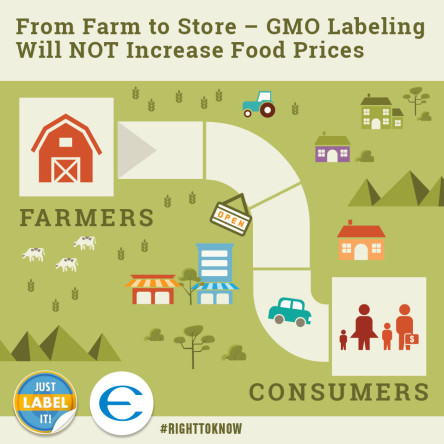
EWG GE labeling won't cost moreI’m normally a Bob Menendez fan but WOW, today I’m so disappointed. The Senator wrote to tell me that he doesn’t believe that states should have the right to label GMOs. And he doesn’t believe in GMO labeling at the federal level either. In fact, Sen Menendez made it clear that he does not oppose the genetically engineered modifications of our foods.

The single reason states have started trying to pass their own GMO labeling laws is that the federal government won’t pass laws to allow United States citizens and residents to know what’s in our food. Vermont is the first state to require GMO labeling of all foods.

Here’s the letter Sen. Menendez sent me:

Dear Ms. Wei:

Thank you for contacting me to express your support for the Genetically Engineered Food Right-to-Know Act. Your opinion is very important to me, and I appreciate the opportunity to respond to you on this critical issue.

As you may know, the Genetically Engineered Food Right-to-Know Act would amend the Food, Drug, and Cosmetic Act to deem any food destined for human consumption as misbranded if it has been genetically engineered or contains genetically engineered ingredients, unless such information is clearly disclosed. The bill labels food as genetically engineered if it is an organism that is the product of intentional genetic engineering or contains any ingredients that are intentionally genetically engineered. This legislation has been introduced before the Senate Health, Education, Labor, and Pensions Committee, which I am not a member of. However, should the bill be presented for a vote before the full United States Senate, I will be sure to keep your views in mind.

As the Garden State, New Jersey has a proud reputation as a leader in many agricultural fields, and I am committed to preserving this legacy. While farmers have naturally modified crops to improve growth and yields for centuries, recent advances in genetic engineering have raised questions about the safety of some of these food products. I believe we must be prudent when approving genetically modified food but I also recognize that unnecessarily labeling inherently safe products, could actually risk confusing and misleading consumers. It is vitally important that we fully understand the impact of these practices on our food supply and our health while harnessing the advantages of modern science and innovation.

Currently, the Food and Drug Administration (FDA) oversees the implementation of food labeling set forth by the Federal Food, Drug, and Cosmetic Act. Foods that must be labeled include most prepared foods, such as breads, cereals, canned and frozen foods, snacks, desserts, and drinks. Foods that do not have to be labeled are called “conventional foods,” which include raw produce such as fruits, vegetables and fish. I continue to believe these standards should be regulated on the national level by objective scientific experts in the FDA rather than through a patchwork of state regulations that could have the unintended consequence of confusing consumers. Please know that I will continue to look for ways to ensure that Americans have access to appropriate and accurate nutritional information, without misleading consumers or imposing overly onerous requirements on food producers.

Again, thank you for sharing your thoughts with me. Please do not hesitate to contact me if I may be of further assistance. You may also visit my website (http://menendez.senate.gov) to learn more about how I am standing up for New Jersey families in the United States Senate.

Learn more about why you should care and find out how the Non-GMO Project can help you get there.

Free Right Tree – Right Place Seminar in Somerset County

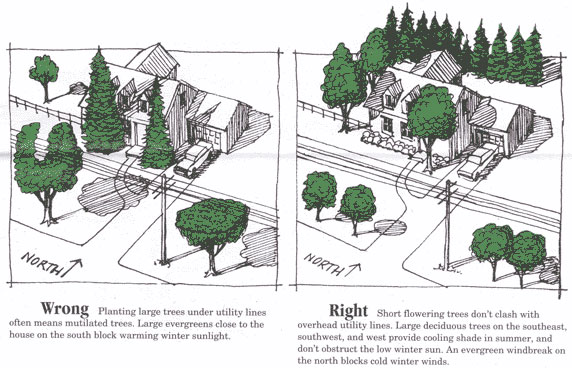
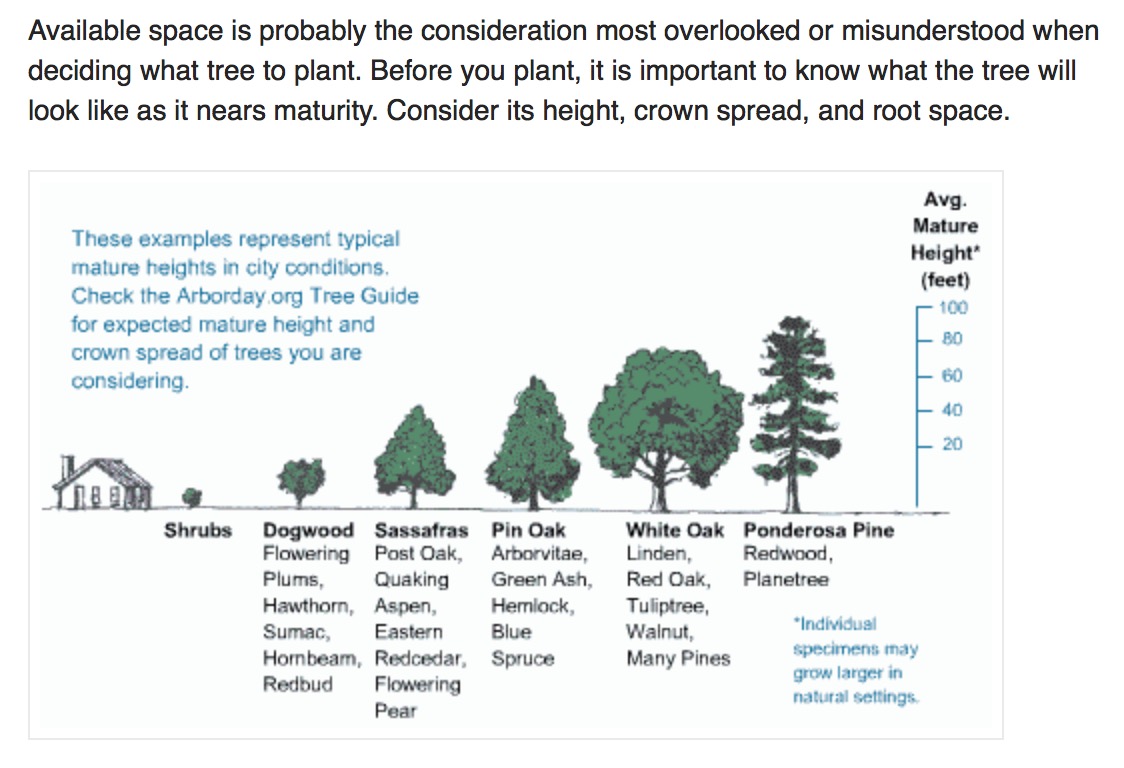
Right tree in right placeThe New Jersey Tree Foundation and Public Service Electric & Gas are offering a free seminar in Somerset County on May 8: Planting the Right Tree in the Right Place, the Right Way in a post-Superstorm Sandy world which addresses

  • Picking the right tree for any location and planting it the right way
  • The importance of utility mark-outs prior to planting
  • Emerald Ash Borer – It’s here!
  • Vegetation management policies to ensure safe and reliable delivery of electric service

Who should attend? Mayors, Freeholders, DPW Supervisors, Environmental & Shade Tree Commissioners, County Officials and any other interested parties. This seminar is worth 2 Continuing Education Units for towns with a 5-year Community Forestry Management Plan.

Date: Friday 08 May 2015
Time: Registration opens 9:00am. Program runs 9:30am – 11:45am
Place: Bridgewater Municipal Building, 100 Commons Way, Bridgewater NJ.

Please RSVP by Friday, May 1 by emailing Lisa Simms at njtf1@juno.com. Please include name and email address for each attendee. Light refreshments will be served.

tree growth guide

The Arbor Day Foundation offers a robust tree placement assessment resource.