National Pollinator Week (June 15-21) just ended but nobody’s going to mind if you keep supporting beautiful bees and butterflies all year round. Your kids will actually thank you one day.
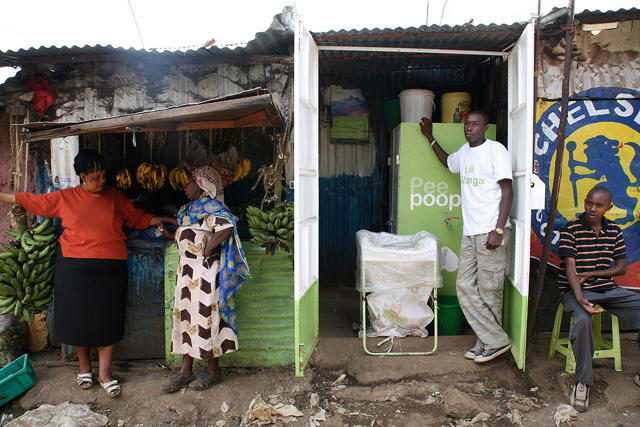
The production of Peepoople bags is being subsidized by its creator, Anders Wilhelmson, but this brilliant idea could become completely self-funding once it catches on more in developing countries. The bags currently cost users 3.4¢. FastCompany writes:
For less than four cents a bag, Peepoople’s mobile toilet takes dangerous waste and turns it into valuable fertilizer. Peepoople makes bags for going to the toilet, but not any old bags. Inside are chemicals that break down the poo and pee into fertilizer. Peepoople’s bags not only help contain dangerous waste, offering alternative sanitation in slums and refugee camps. They also begin to turn the feces into a positive material that can nourish crops.
The business was started 10 years ago by Anders Wilhelmson, an architect, urban planner, and professor at Sweden’s Royal Institute of Technology … (who) started to think of the bag – which he considers a sort of mobile toilet, something akin to what a cell phone is to a landline.
On Thursday, Pope Francis released his 180-page papal encyclical, “On Care for Our Common Home”, which sets for the need for the people of the world to halt climate change and end global social injustice. I have high hopes that his statement will change our world, transforming personal human choices that have led us to the brink of nature’s destruction and ultimately, our own … because the Pope’s standing as a world leader is never in dispute.
I have noticed that even lapsed Catholics, people whom are not Catholics and people who do not believe in Christ, nonetheless respect the Pope and pay attention to His Holiness’ edicts and opinions.
Pope Francis has called on the world’s rich nations to begin paying their “grave social debt” to the poor and take concrete steps on climate change, saying failure to do so presents an undeniable risk to a “common home” that is beginning to resemble a “pile of filth”.
The pope’s 180-page encyclical on the environment, released on Thursday, is at its core a moral call for action on phasing out the use of fossil fuels.
But it is also a document infused with an activist anger and concern for the poor, casting blame on the indifference of the powerful in the face of certain evidence that humanity is at risk following 200 years of misuse of resources.
Up to now, he says, the world has accepted a “cheerful recklessness” in its approach to the issue, lacking the will to change habits for the good of the Earth.
“Climate change is a global problem with grave implications: environmental, social, economic, political and for the distribution of goods,” the papal statement says. “It represents one of the principal challenges facing humanity in our day.”
…The pontiff included a personal handwritten note in his communication, ending with a plea for help: “United in the lord, and please do not forget to pray for me.”
Another Guardian article shares reactions from scholars and citizens around the world. Prof Ian Gough speaks to the difference between need and greed, terms Pope Francis reintroduces to global discussion that modern economics has buried:
• Pope Francis’s encyclical “on care for our common home” introduces two terms buried by modern economics: “need” and “greed”. These represent two opposing worldviews. One seeks to satisfy our wants or preferences, which are limitless, non-satiable, substitutable and amoral. The other prioritises meeting universal human needs, which are limited, sufficient, non-substitutable and with clear ethical grounding. By counterposing these and putting them centre-stage, he has clarified the egregious moral dilemma inherent in climate change in a way that can unite both religion and humanism.
The pope also takes issue with the arguments of green growth, which is the current dominant strategy to handle climate change. Yes, we must support the fastest possible decarbonisation of the global economy through eco-efficiency, as Nicholas Stern persuasively argues in his new book, but at some point, very soon, we will need to switch to post-growth strategies.
This revolutionary encyclical challenges both current ethics and economics.
Prof Ian Gough
London School of Economics
I’m interested in knowing your views on the Pope’s encyclical and the impact it may have on our world. Please share …
The government trustees charged with restoring the Gulf have released 10 new projects, including two that will protect bluefin tuna and sea turtles. This suite of new projects is the fourth phase of the Natural Resource Damage Assessment early restoration process, funded by a $1 billion “down payment” from BP to restore the damage caused by the oil disaster.
We need your help. The trustees are calling for comments on the 10 proposed projects by July 6 – so, add your comment today!
Here’s what I wrote (first paragraph are my words):
Diversity is the invisible undercurrent that powers our world. And the sea covers most of our planet. We need to protect and nurture natural life and marine victims of the Gulf Oil tragedy. Please, act on behalf of a people and a planet who need your help.
Canned message follows (written by Ocean Conservancy):
I am writing in support of the pelagic longline bycatch reduction and sea turtle early restoration projects, proposed in phase IV of the Natural Resource Damage Assessment early restoration process.
For too long, we have seen the list of impacts to deep water species grow, while the projects to restore those species never materialized. From dolphins dying in record numbers, to corals covered in oil and millions of gallons of oil sitting on the seafloor, a troubling story is unfolding offshore. It is past time to begin restoring our impacted deep water resources and habitats. Only by addressing restoration in an integrated and comprehensive way — from the coast to the deep water can our impacted habitats, wildlife and coastal communities fully recover.
With these two projects, I am encouraged to see the trustees finally begin to restore the Gulf not just on the coast but beyond the shore, where the BP oil disaster began. These projects represent the comprehensive approach that we’ve been hoping to see in the five years since the disaster began. If we want to truly restore the Gulf, we must focus on both the coast and the deep water — our communities, culture and livelihoods depend on it.
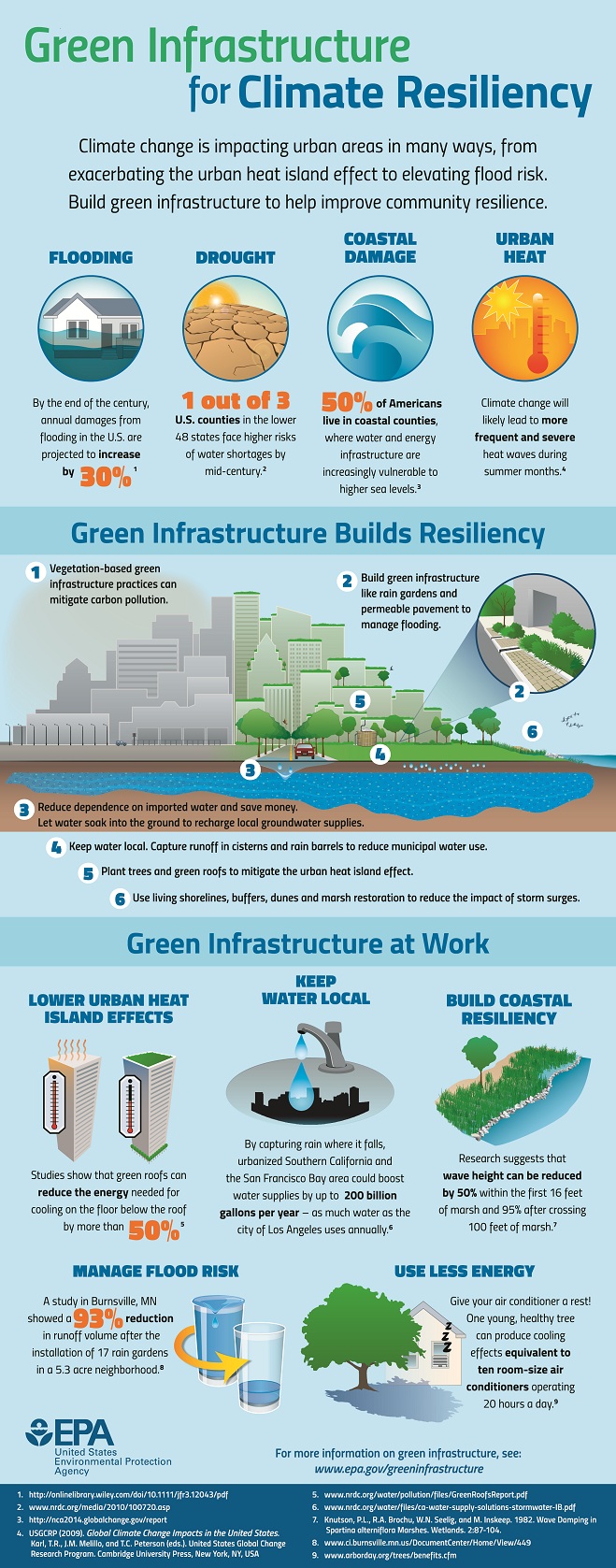
This EPA infographic may just be the mother of all Green Infrastructure elucidations. It shows many different ways to incorporate GI in communities and how this helps us conserve water, reduce energy use, reduce flooding risks and make both buildings and Planet Earth, cooler.
Wikipedia‘s Green Infrastructure definition is pretty empty: it doesn’t help us paint a mind picture of what GI is.
Green Infrastructure or blue-green infrastructure is a network providing the “ingredients” for solving urban and climatic challenges by building with nature.
But American Rivers helps us understand the scope and relevance of Green Infrastructure.
Green infrastructure is an approach to water management that protects, restores, or mimics the natural water cycle. Green infrastructure is effective, economical, and enhances community safety and quality of life.
It means planting trees and restoring wetlands, rather than building a costly new water treatment plant. It means choosing water efficiency instead of building a new water supply dam. It means restoring floodplains instead of building taller levees.
Green infrastructure incorporates both the natural environment and engineered systems to provide clean water, conserve ecosystem values and functions, and provide a wide array of benefits to people and wildlife.
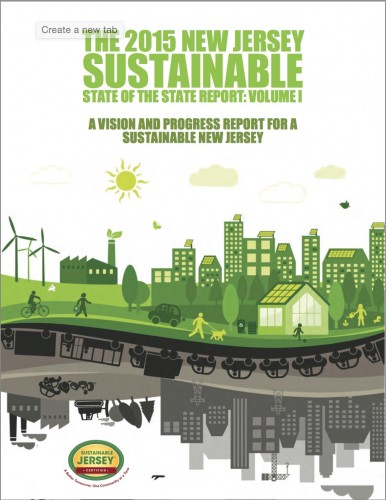
The 2015 NJ Sustainable State of the State Report is now available as a free download. The report is published by Sustainable Jersey, the statewide program helping municipalities become greener and more resilient. It was released on June 10 2015 at the Sustainable Jersey Summit.
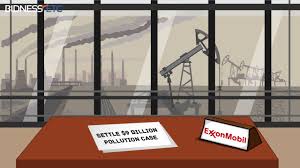
Kimi Wei of Fair Lawn wrote that Exxon “should be made to understand that the earth is a common asset belonging to all. It cannot be used by some for profit while many others experience loss of enjoyment and access to the land.”
Almost sounds profound, right?
Senator Raymond Lesniak is taking a strong stand in favor of making Exxon-Mobil pay what the damages are worth. He’s got a petition going. Let’s support his stand with our signatures and prayers, and see how far we can move the dial towards fair.
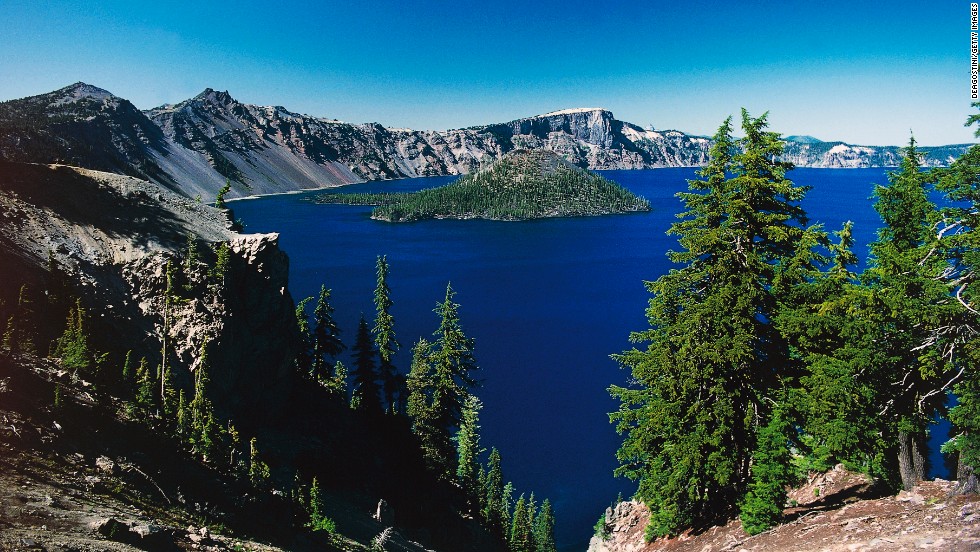
Crater Lake, deepest lake in the United StatesFor decades, conservatives who support profitable development over natural resource protections have been chipping away at the vital protections of the Clean Water Act. But thanks to President Obama, this is no longer the case. The New York Times reports:
President Obama on Wednesday announced a sweeping new clean water regulation meant to restore the federal government’s authority to limit pollution in the nation’s rivers, lakes, streams and wetlands.
The Clean Water Rule, which would apply to about 60 percent of the nation’s water bodies, comes as part of a broader effort by Mr. Obama to use his executive authority to build a major environmental legacy, without requiring new legislation from the Republican-controlled Congress.
In an historic step for the protection of clean water, the Clean Water Rule was finalized today by the US Environmental Protection Agency and the US Army to clearly protect from pollution and degradation the streams and wetlands that form the foundation of our nation’s water resources. The rule is grounded in law and the latest science, and was shaped by public input. It does not create any new permitting requirements for agriculture and maintains all previous exemptions and exclusions.
Jennifer Peters, Water Programs Director for Clean Water Action , writes:
Earlier today I stood on the Anacostia River in Washington, DC with dozens of other clean water supporters to watch U.S. Environmental Protection Agency (EPA) Administrator Gina McCarthy and Assistant Secretary of the Army Jo-Ellen Darcy sign the final Clean Water Rule. With this historic action, the Obama administration is restoring protection for critical water resources including the drinking water sources for one in three Americans.
For more than 12 years Clean Water Action has been leading the fight to close loopholes in the Clean Water Act that left more than half of our nation’s streams and more than 20 million acres of wetlands vulnerable to polluters and developers. Now these vital water resources are once again clearly protected by the Clean Water Act.
EPA Administrator Gina McCarthy explains how important this rule is:
For the water in the rivers and lakes in our communities that flow to our drinking water to be clean, the streams and wetlands that feed them need to be clean too. Protecting our water sources is a critical component of adapting to climate change impacts like drought, sea level rise, stronger storms, and warmer temperatures – which is why EPA and the Army have finalized the Clean Water Rule to protect these important waters, so we can strengthen our economy and provide certainty to American businesses.
Background
The health of our rivers, lakes, bays, and coastal waters are impacted by the streams and wetlands where they begin. And, people need clean water for their health too: About 117 million Americans – one in three people – get drinking water from streams that lacked clear protection before the Clean Water Rule.
Protection for many of the nation’s streams and wetlands has been confusing, complex, and time-consuming as the result of Supreme Court decisions in 2001 and 2006. EPA and the Army are taking this action today to provide clarity on protections under the Clean Water Act after receiving requests for over a decade from members of Congress, state and local officials, industry, agriculture, environmental groups, scientists, and the public for a rulemaking.
In developing the rule, the agencies held more than 400 meetings with stakeholders across the country, reviewed over one million public comments, and listened carefully to perspectives from all sides. EPA and the Army also utilized the latest science, including a report summarizing more than 1,200 peer-reviewed, published scientific studies which showed that small streams and wetlands play an integral role in the health of larger downstream water bodies.
Specifically, the Clean Water Rule:
Clearly defines and protects tributaries that impact the health of downstream waters. The Clean Water Act protects navigable waterways and their tributaries. The rule says that a tributary must show physical features of flowing water – a bed, bank, and ordinary high water mark – to warrant protection. The rule provides protection for headwaters that have these features and science shows can have a significant connection to downstream waters.
Provides certainty in how far safeguards extend to nearby waters. The rule protects waters that are next to rivers and lakes and their tributaries because science shows that they impact downstream waters. The rule sets boundaries on covering nearby waters for the first time that are physical and measurable.
Protects the nation’s regional water treasures. Science shows that specific water features can function like a system and impact the health of downstream waters. The rule protects prairie potholes, Carolina and Delmarva bays, pocosins, western vernal pools in California, and Texas coastal prairie wetlands when they impact downstream waters.
Focuses on streams, not ditches. The rule limits protection to ditches that are constructed out of streams or function like streams and can carry pollution downstream. So ditches that are not constructed in streams and that flow only when it rains are not covered.
Maintains the status of waters within Municipal Separate Storm Sewer Systems. The rule does not change how those waters are treated and encourages the use of green infrastructure.
Reduces the use of case-specific analysis of waters. Previously, almost any water could be put through a lengthy case-specific analysis, even if it would not be subject to the Clean Water Act. The rule significantly limits the use of case-specific analysis by creating clarity and certainty on protected waters and limiting the number of similarly situated water features.
The small, WiFi-connected device detects and calculates the level of fine particulate matter, particles that are invisible to the naked eye and just a tiny fraction of the width of a human hair. The lower the count, the better the air — and the fewer risks to health.
A high presence of particulate matter can exacerbate problems like asthma, lung disease and allergies. But the loanable air monitor is helping residents find and fix the source of the problem.
In a ceremony tonight, the American Civil Liberties Union will present the Roger Baldwin Medal of Liberty awards to four Connecticut librarians and the president of a New York Internet Service Provider (ISP) who stood up against the Patriot Act and refused to violate the privacy of their patrons and clients.
This is one more reason to appreciate our public libraries and the fine men and women who staff them. Thank you guys!
If your library doesn’t have a Speck to lend out, make a request that they get one.
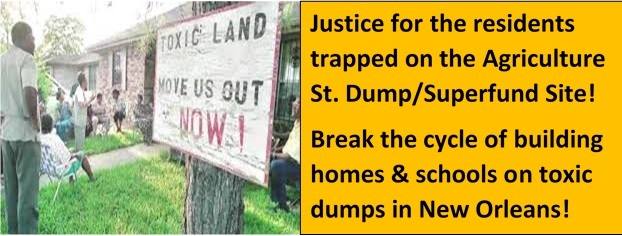
The Campaign for Toxic-Free Schools in New Orleans and Louisiana reports that the Louisiana House of Representatives voted unanimously in favor of House Bill 180, which would prohibit the construction of new schools on waste sites. The bill now goes to the Louisiana Senate – let’s all pray that it passes!
 National Pollinator Week (June 15-21) just ended but nobody’s going to mind if you keep supporting beautiful bees and butterflies all year round. Your kids will actually thank you one day.