How converting farmland to solar fields affects rural residents’ quality of life & the future of agriculture

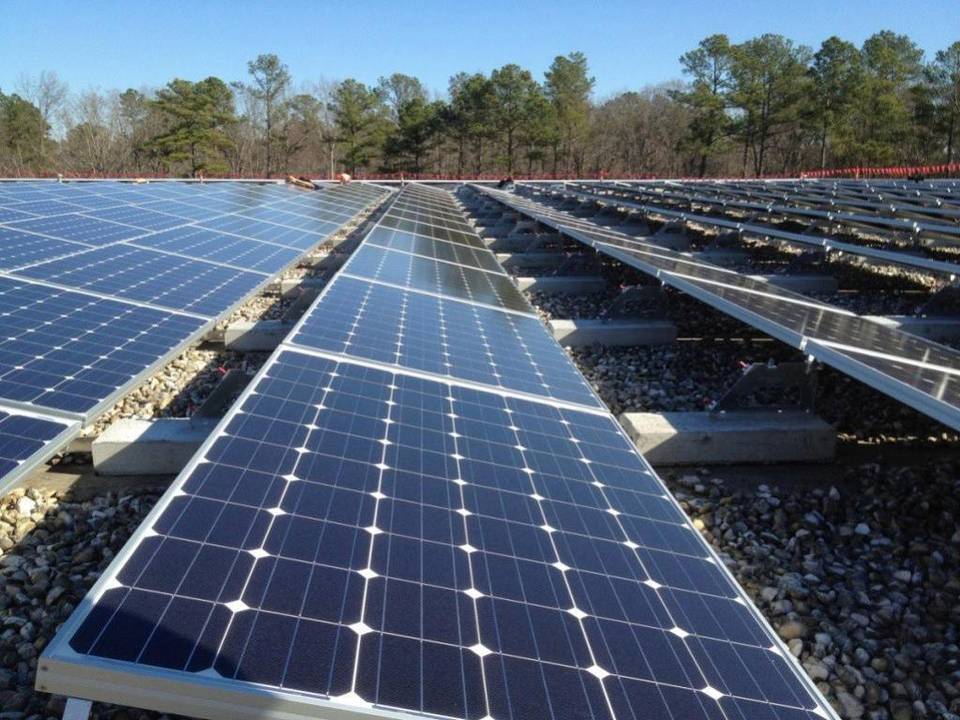
Solar Array
Solar Array is in Fuquay-Varina Source: Raleigh’s News & Observer
Maybe a few silly things were said by residents of Woodland, North Carolina about yet another solar farm proposal for town land. But there are excellent reasons for residents to reject a fourth solar installation. Woodland Councilman Ron Lane shares the facts:

The Strata Solar project was not doomed by irrational fears. The photovoltaic panels were proposed just 50 feet from residential homes, and the project was too close to State Route 258 leading into town.

Raleigh News & Observer reporter John Murawski explains that converting farmland to solar fields is not only a quality of life issue for local residents – it may be an important agricultural issue for our nation as well:

…resistance often flares up in areas that have become magnets for solar farms – agricultural communities with cheap farmland near electrical substations where solar farms can interconnect to the power grid, said Stephen Kalland, executive director of the N.C. Clean Energy Technology Center.

But the state’s remarkable transformation of soybean fields into rows of indigo panels is also alarming some agriculturalists. In a Nov. 30 letter to the state’s extension agents, N.C. State University crop science professor Ron Heiniger warned that the rapid spread of solar farms “may well be one of the most important agricultural issues of our generation.”

Heiniger’s call-to-arms, reproduced in at least one local paper, predicts that solar farms could shift land use to such an extent that “it is highly unlikely this land will ever be farmed again.”

Thanks to Thomas Beckett for setting the record straight concerning this matter. I joined the social media crowd in poking fun of Woodland’s residents but obviously, this is no joking matter.

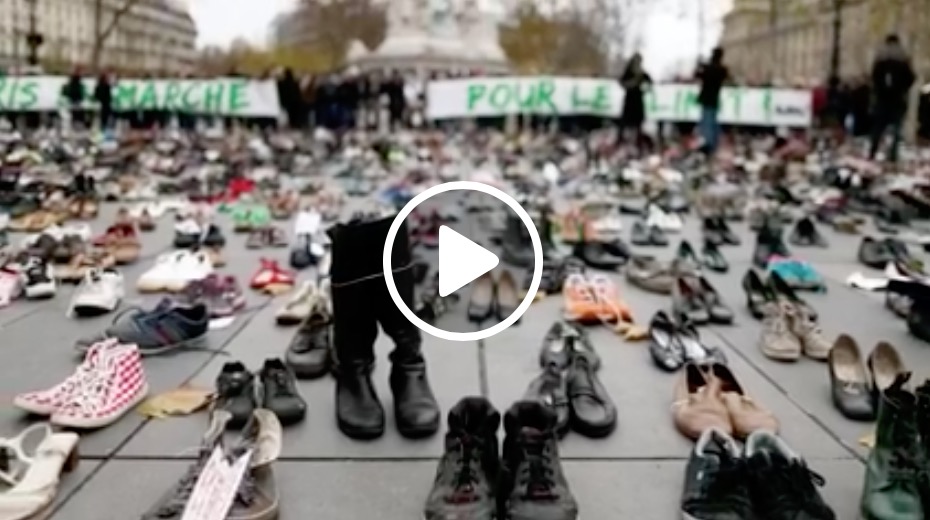
A love letter from #EarthToParis – short video narrated by Morgan Freeman

Earth to Paris
Source: United Nations Foundation video
#‎LoveEarth Add your voice to the global call for climate action‬: http://www.earthtoparis.org/

Film by Nirvan / GOOD. Narrated by Morgan Freeman. Music: “Allegro Prestissimo” performed by Yo-Yo Ma & Bobby McFerrin, courtesy of Sony Music Entertainment. Nature footage courtesy of Moving Art by Louie Schwartzberg. Produced by SpecialOrder.co.

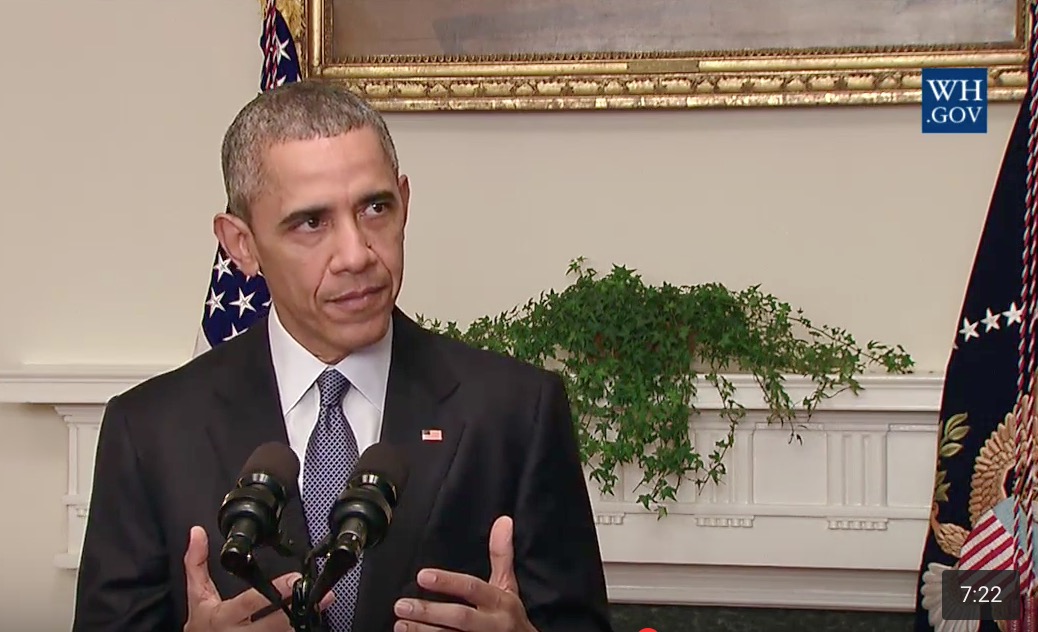
President Obama Announces COP21 Climate Agreement

Pres Obama on Climate Accord
Source: White House
President Obama announces the global agreement to combat climate change that was just reached in the COP21 climate talks which culminated in Paris today, on Saturday 12 December 2015:

We cannot be complacent because of today’s agreement. The problem’s not solved because of this accord … it creates the mechanism, the architecture for us to continually tackle this problem in an effective way.

More at the White House blog

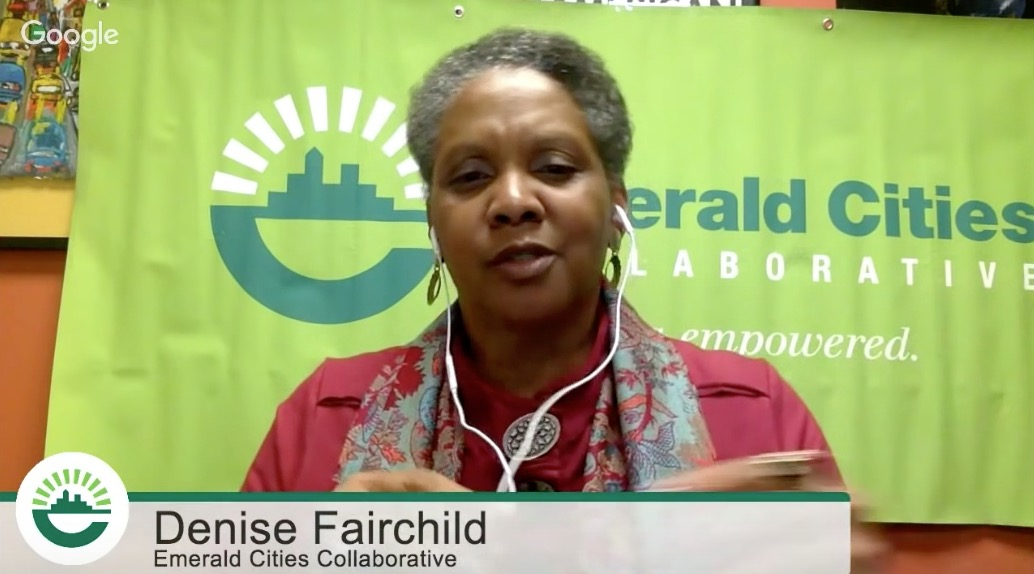
About the webinar: What is Energy Democracy and Why Does It Matter?

Denise Fairchild
Source: Webinar Archive of What is Energy Democracy and Why Does It Matter?
Streamed live on Nov 12, 2015
Featuring:
Janet Redman, Institute for Policy Studies (moderator)
Denise Fairchild, Emerald Cities Collaborative
Meghan Zaldivar, PUSH Buffalo
Miya Yoshitani, Asian Pacific Environmental Network

As the climate crisis heats up, and its impacts on the economy and people’s lives become more pronounced, concerned people everywhere are looking for new alternatives. Energy democracy seeks to replace the current corporate fossil-fuel economy with one that puts racial, social, and economic justice at the forefront of the transition to a 100% renewable energy future.

By energy democracy we mean bringing energy resources under public or community ownership and/or control, a key aspect of the struggle for climate justice and an essential step toward building a more just, equitable, sustainable, and resilient economy.

We’ve invited key energy democracy leaders to kick-start a conversation on why energy democracy is so important.

Here’s the webinar archive:

Northeast US will have more heat, snow, rain according to powerful data modeling

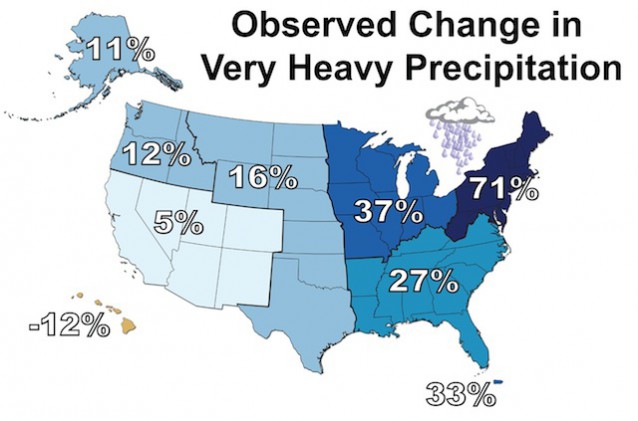
NCA Heavy Precipitation map
Percent changes in the amount of precipitation falling in very heavy events (the heaviest 1%) from 1958 to 2012 by region. Source: 2014 National Climate Assessment
Civil and environmental engineering Professor Joshua Fu at University of Tennessee, Knoxville carried out a climate change study using a huge dataset on the university’s supercomputer. The results show that the Northeastern United States will become hotter, experience more heat waves and get more precipitation in coming years. Data-based climate models show what cities will experience 50 years into the future.

Harnessing the supercomputing power of UT’s Kraken and Oak Ridge National Laboratory’s (ORNL) Jaguar (now Titan, the fastest in the world), the researchers combined high-resolution topography, land use information and climate modeling. Then they used dynamical downscaling to develop their climate model results. Dynamical downscaling allowed the researchers to develop climate scales as small as four square kilometers.

“Instead of studying regions, which is not useful when examining extreme weather, dynamical downscaling allows us to study small areas such as cities with a fine resolution,” said Fu.

Global warming doesn’t mean that all regions of the earth will always be warmer. ThinkProgress explains:

One of the most robust scientific findings is the direct connection between global warming and more extreme precipitation or deluges. “Basic physics tells us that a warmer atmosphere is able to hold more moisture — at a rate of approximately 7 per cent increase per degree [Celsius] warming,” as the U.K. Met Office explained in its 2014 update on climate science. “This is expected to lead to similar percentage increases in heavy rainfall, which has generally been borne out by models and observed changes in daily rainfall.”

Fu cautions:

It is important that the nation take actions to mitigate the impact of climate change in the next several decades. These changes not only cost money – about a billion a year in the U.S. – but they also cost lives.

Long Island mom’s TEDx Talk: overcoming eco-grief & becoming an ecofeminist

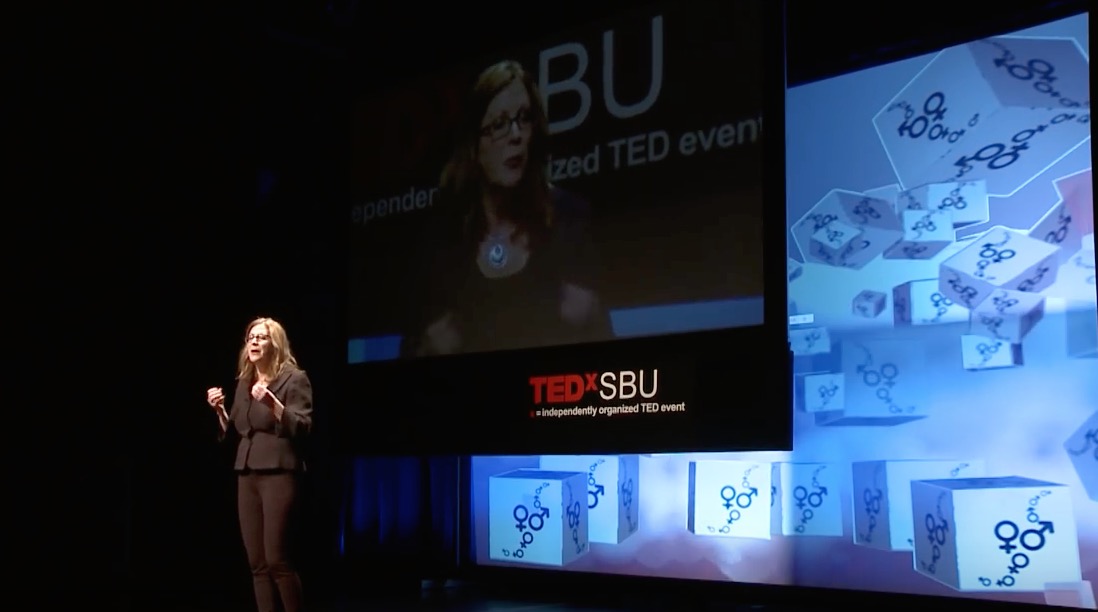
Heidi Hutner's TedX Talk
Source: Heidi Hutner’s TedX Talk
ClimateMama recommends friend Heidi Hutner’s TED Talk: “Eco-Grief and Ecofeminism”. In this stirring 15+ minute talk, Heidi chronicles her journey from cancer patient at age 35 through “eco-grief” to a determination to act … Previously she wanted to hide from looking at how ecologically messed up our world had become.

When Heidi learns from a family friend of her own mother’s ecofeminism, she becomes fascinated with taking action. Her eco-grief lifts, Heidi’s life is transformed and her message is: the same can happen to you.

…the blinders flew open & eco-grief set in … feel that grief because then you will be called to act and you will join us and we will fix this thing.

Raise your voice against Great Adventure destroying 18,000+ trees instead of putting solar on its parking lot

Jim Florio opposes great adventure forest destruction
Former Gov. Jim Florio opposes Great Adventure’s forest destruction plan. Photo credit: Jennifer Peacock
Great Adventure has 100 acres of parking lots sitting out reflecting sunlight all year round helping to increase global warming. The perfect place for solar panels, as Clean Water Action NJ points out: “Green energy and shade for cars and people.” So why is the Texas based company planning instead to demolish 70 acres of 18,000 plus full-growth trees for its solar farm?

In May, the Department of Environmental Protection offered to buy the forest with Green Acres dollars for the state’s open space inventory, but the entertainment company wasn’t swayed. NJ Spotlight quotes assistant DEP commissioner Richard Boornazian, who wrote in a letter to Six Flags,

“We oppose large solar projects that damage or destroy previously undisturbed resources, such as the project you proposed … Such projects are entirely inconsistent with our mission and with our guidance for solar siting.”

100 Jackson, NJ residents residents turned out at a town hearing few days ago to ask why the forest destruction is still being considered. Help by raising your voice too! As CWANJ’s director writes in an email,

There will be another hearing and much more. You don’t have to be from Jackson to be involved…anyone can attend and speak at the hearings, write letters and (spread the word through) social media.

Governor Jim Florio cautions,

“The reputational risk for the company,” Gov. Florio added, “is very high. The whole idea of a facility that caters to young people, children, and doing the things that they’re doing and having the negative impact climate-change-wise is something that will not resonate well with the young people.”

Start by signing the petition.

To get special updates on the campaign, email Director David Pringle and follow CWANJ on Facebook or Twitter.

Elon Musk’s SolarCity used cheap prison labor to fulfill state funded contract

Chain Gang Street Sweepers
Source: Wikipedia. Chain gang street sweepers, Washington, DC 1909
Grist reports that under the pretense of enhancing the Oregon economy with good paying jobs, SolarCity used prison labor to fulfill contracts to put solar panels on two universities. The workers were paid under $1.00 an hour and the contracts were funded with government dollars:

For SolarCity, the contract also looked like a win. Under a lucrative state program, the Oregon Department of Energy doled out $11.8 million in tax credits for the $27 million project. (SolarCity would not confirm the amount of the tax breaks despite repeated requests.) Those generous tax incentives — part of the Business Energy Tax Credit program, which ended in 2014 — came with an imperative for “job creation and retention requirements.”

For its part, SolarCity did install panels that were produced by Oregon workers. But those workers were behind bars at Sheridan Federal Prison — and instead of benefiting from a program that was supposed to pump up the regional economy, they were paid less than a dollar an hour for their labor.