I just can’t buy my sons poisonous cereal any more

Your lady friend made the big mistake of looking at the ingredients list of her son’s favorite cereals today and afterwards COULD NOT bring myself to purchase a single box. Corn syrup is one of the first/main ingredients listed and that stuff is DEATH. But oh boy, my sons love cereal.

I walked down the aisle muttering to myself about how bad corn syrup is for people, and then spotted some of that healthy-looking stuff right at the end of the aisle, marked half price! I checked the labels. Yep! Real sweeteners like honey, molasses, sugar and no corn syrup, so I bought 8 boxes. This stuff is going to be here a long time if my boys don’t like it.

High Fructose Corn Syrup Does Weird Stuff to Your Body
While the commercials claim that it’s fine in moderation, the truth is that the whole problem with high fructose corn syrup in the first place, is that moderation is seemingly impossible. The syrup interferes with the body’s metabolism so that a person can’t stop eating. It’s truly hard to control cravings because high fructose corn syrup slows down the secretion of leptin in the body. Leptin is a crucial hormone in the body that tells you that you’re full and to stop eating. That’s why it’s so closely associated with obesity in this country. It’s like an addictive drug.

http://recipes.howstuffworks.com/avoid-fructose-corn-syrup.htm

The Digestion of High Fructose Corn Syrup Is Hard On the Body
Acidic “foods”, which are void of nutrition, wreak havoc on the body. To compensate, the body will pull calcium and other minerals from our bones, teeth, and organs to keep our blood slightly alkaline. Enzymes must be produced to metabolize high fructose corn syrup and micro-nutrients must be utilized. High fructose corn syrup causes mineral imbalances and deficiencies, which can cause a host of other diseases and health problems.

http://www.organiclifestylemagazine.com/issue-5/high-fructose-corn-syrup-not-so-sweet-surprise.php

Not easy to find ideal venue for Hackensack Green Drinks

Green Drinks Hackensack has been meeting at Victor’s Maywood Inn in Maywood since our first meeting venue, The Restaurant, burnt down. Victor’s has been very hospitable to us and they have great food, but there are a few reasons we’d like to find a new home for our monthly get-togethers:

  • We’d like to meet in downtown Hackensack because it’s convenient for local residents to access by biking or walking, and it also houses the regional county bus hub.
  • We’re getting a bit cramped at our table in the bar area of Victor’s, where we meet, but don’t relish the idea of sitting in the restaurant portion of the place because it’s kind of formal for the type of gathering we enjoy holding.
  • When there are sports games on Monday nights or the regular bar patrons decide to play the juke box, it’s so loud it’s hard to carry on conversations. Ultimately, conversation about sustainability and the environment is what Green Drinks is all about.

Last night the group gathered was rolling ideas around about a change in venue, and I thought of a restaurant I’ve eaten at several times that’s located on Main Street and has great food. It’s a tradition for Green Drinks to take place in places that serve liquor, and this place doesn’t, but this is not a requirement or a big consideration for us anyway, since 70% of our members don’t drink at meetings. This morning I reached out to the restaurant’s owner to discuss the idea of us meeting there, but although he admits to his place being pretty empty on Monday nights, he still isn’t keen on the idea of hosting us.

In the couple of years I’ve been scouting out good places to meet, B is certainly not the first venue owner to offer discouragement instead of a warm welcome. He wanted us to commit to ordering a minimum amount per person, something I’m not willing to do since inclusion is part of the Green Drinks philosophy I’m sure B’s not asking casual diners who happen by on a given Monday night to do the same, so that’s a discriminatory practice! When restauranteurs hear “environmental”, do they think of wispy hippy types who consume only alfalfa sprouts, honey and wheat bread and ride bikes because they can’t afford to drive cars – and can’t imagine the reality: that the north Jersey Green Drink crowd contains plenty of professionally employed home owners who eat out on a regular basis?

I ended up asking myself – and now I’m asking followers: do you think it’s shortsighted of a food establishment’s owner to discourage Green Drinks from gathering there on an off night mainly because we won’t guarantee consumption of a minimum amount of food per person? Since I was thinking about it, I made up a list of:

Reasons a venue can benefit from hosting Green Drinks gatherings

  • If the menu’s good at the place we meet, group members do order food. For some reason, many Green Drinkers are also foodies. Sometimes, every member of the group eats.
  • We meet on Mondays and Tuesdays because those are off nights for restaurants. We want to be able to chat easily without the distraction of too much ambient noise, and feel at ease holding the kind of lively discussions Green Drinks is famous for.
  • It costs a restaurant to be open whether or not they have customers, so why not fill the seats at empty tables?
  • It’s easier to draw diners into a full place than an empty one.
  • Places empty on off nights benefit from a bit of revenue by having us there, no matter how much our group spends
  • If Green Drinkers like a venue, they will introduce friends to it and patronize it on other occasions besides our monthly meetings.
  • Over 3,000 people a month receive announcements about Green Drinks meetings and the venues where we hold them.
  • A host venue can show its support for environment health and making their community more sustainable just by hosting Green Drinks gatherings (=free advertising).
  • By listening in on – or actively participating in – our conversations, business owners can learn about ways to save money and enhance their communities through implementing sustainability practices.

Nature v. cookie money – lessons for Girl Scouts

A couple of Girl Scouts were looking for material about the cookies sold each year as this organization’s main fundraiser and discovered much more than they wanted to. Their findings have put Madison Vorva and Rhiannon Tomtishen at the center of a national debate on what an acceptable tradeoff can be to monetize natural resources in order to make money from items that are not truly valuable in and of themselves, when the cost is environmental destruction and sometimes, lives. The young scouts found out that Girl Scout cookies are made with palm oil derived from trees grown in groves that Orangutan habitat is destroyed to make open space for. In simple terms, Orangutans die in large numbers due to loss of habitat in order for Girl Scouts to have cookies to sell.

For Madison Vorva and Rhiannon Tomtishen, it all began with orangutans. Four years ago-inspired by the work of primate researcher Jane Goodall-the two friends from Ann Arbor, Mich., collaborated on a research report on the endangered primates to help qualify for their Girl Scout Bronze award, one of the highest prizes offered by the 3.2 million-member organization. Vorva and Tomtishen have both been scouts since they were five years old, and they take their roles and responsibilities seriously. So when they discovered that one of the major threats to orangutan populations in Indonesia was deforestation caused by the growth of palm plantations-and that the iconic cookies the Girl Scouts sell can sometimes contain palm oil from plantations on deforested land-the girls refused to simply do nothing. “Being a Girl Scout is about showing stewardship for the land,” says Vorva, who is now 16. (Tomtishen is 15.) “We knew we had to keep fighting.”

Making Girl Scout Cookies Better for the Planet | Rainforest Action Network http://www.ran.org/making-girl-scout-cookies-better-planet#ixzz1ov7nzi8d

Unfortunately, the Girl Scout organization has not demanded major immediate changes to their cookie formula and seems content to go along with the plan offered by agribusiness giants like Cargill, which is talking about plans to offer sustainably produced palm oil several years from now – probably hoping that by then, there won’t be any Orangutans left to protect. Girl Scouts has taken this position:

In its announcement Wednesday, the Girl Scouts said it has directed its bakers to use as little palm oil as possible, and only in recipes where there is no alternative. It wants its bakers to move to a segregated, certified sustainable palm oil source by 2015.

The Scouts will buy GreenPalm certificates to support the sustainable production of palm oil. The certificates offer a premium price to palm oil producers who are operating within best-practices guidelines set by the Roundtable for Sustainable Palm Oil, an organization of palm oil producers, consumer goods manufacturers, retailers, environmentalists and others.
Girl Scouts of the USA will also become an affiliate member of the roundtable.

The teen activists and environmentalists welcomed the announcement as a good first step, but said much more needs to be done.

http://www.msnbc.msn.com/id/44718393/ns/world_news-world_environment/#.T11L7piId5b

Also see Girl Scouts Activists, Rainforest Action Network and Union of Concerned Scientists Respond to Palm Oil Cookie Announcement by Girl Scouts USA

Saddle River County Park watershed cleanup 3/24!

Water is one of our most valuable resources with less than 1% of the water supply on Earth used for drinking. This precious resource is being threatened, whether from fracking or pollution, but we can and must protect it. World Water Day is March 22nd: what better way to celebrate and help care for this precious resource than by a water way (watershed) clean up? Please join ours on Saturday, March 24. If you have gardening or work gloves please bring them and dress appropriately.

Saturday March 24th from 10am to 12pm
Saddle River County Park

Meet at Saddle River Road in Fairlawn Exit Off of Route 4 parking lot P on your Right
Here is a map to better understand: http://www.co.bergen.nj.us/bcparks/maps/FairlawnAreaMap.pdf
Everyone Welcome! Friends, family, neighbors spread the word to whoever wants to come out & make a difference!

Please RSVP to the clean up

Nicole Dallara, Outreach Coordinator, New Jersey Sierra Club
609-656-7612

Help protect national forests – sign petition

America’s national forests provide essential habitat for lynx, grizzlies and other wildlife — and clean water for millions of Americans. Yet new rules could threaten the sanctity of these special places, paving the way for more logging and more destructive development on our national forests. Help protect these special places. Sign the petition online at: http://dfnd.us/vYt93D

Take Back Port Newark forum

Take Back Port Newark
When: Wednesday, March 21, 2012
Where: Essex County College
Siegler Hall, Room 2132
303 University Avenue, Newark, NJ 07102

SPEAKERS:

  • Larry Hamm, Chairman of People’s Organization for Progress
  • Reverend Jethro James, Paradise Baptist Church
  • James Harris, President NJ NAACP
  • Kim Gaddy, Environmental Justice Organizer, NJ Environmental Federation
  • Henry Rose, Statewide Coordinator – NJ Environmental Justice Alliance

It’s time to take back the Port and make it work for Newark and its people!

The Two Faces of Port Newark

For corporations in the Tri-State Area, Port Newark means:

  • $50 billion dollars worth of imported goods per year!
  • “. . . the most important engine for economic growth in our state” (Gov. Christie)
  • Eating Very Well!!!

For Newark residents, Port Newark means:

  • Only $71 million dollars in rent piad for both the Port and Newark Airport
  • Budget woes that lead to cuts in residents’ services, and more pollution and ashtma in our communities.
  • Washing Dirty Dishes!

For more information contact:
Take Back Port Newark Coalition: 978-573-6013 or 201-878-8482

Need public support at hearing on waste treatment plant in Irvington

An ordinance sponsored by Freeholders Rufus Johnson and D. Bilal Beasley will be discussed to establish a solid waste treatment plant on Grove Street in Irvington (near Irvington Park) to dispose of solid infectious waste at a rate of 6-8 tons per day. Because this plant will bring dangerous waste and increased traffic that will affect Essex County residents generally, Irvington is asking county residents to support it in protesting the plant’s establishment.

The hazards to lives and the added toxicity in the environment caused by treatment plants is well documented. The increase in traffic traveling into and out of a neighborhood can all on its own, destroy a community’s peace and the safety of its children for generations to come, and degrade roadways throughout the region. It will certainly impact streets and lower property values in Irvington itself. We must come out to speak against this plan!

Please let your doctor, your nurse, your family, your neighbors, your teachers and your work colleagues know about this hearing and join us to show solidarity and concern. There is a promise of 50 constructions jobs and 50 on site jobs through this project, but that will not compensate for the permanent harm that area residents will suffer if the site for this plant is approved.

For more information contact the Irvington NAACP or call 973-373-6948.

Read how a New York State community is confronting a similar proposal.

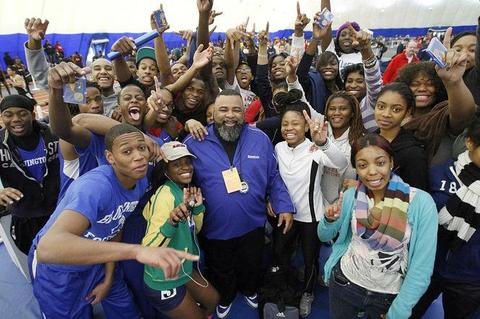
Photo is the Irvington Track Team at a big win on 12 Feb 2012.

Transgenic foods, GMOs and clear labelling

I don’t know a whole lot of transgenic foods, but I think there’s something wrong, anyway, in adding salmon fish genes to say, whatever plant my tortilla chips are produced from in order to make those plants not as susceptible to some disease or pest, or more likely to grow in a certain way or at a certain rate of speed. I don’t want to argue with people who say, “You can’t impede commerce and every part of the world has to be somebody’s commercial oyster.” Those people are wrong, but I don’t care to argue with them.

However, I do think that we, the people, should know when weird stuff is implanted in the foods we consume thinking we’re eating something we’re familiar with and that’s naturally derived. I am so not alone in my thinking. By the way, transgenic and GMO are terms for the same practice – modifying the genes of one form of life with a gene from a different life form. U-T San Diego reports,

In a nationwide telephone poll conducted in October 2010 by Thomson Reuters and National Public Radio, 93 percent said if a food has been genetically engineered or has genetically engineered ingredients, it should say so on its label — a number that has been consistent since genetically modified crops were introduced. FDA guidelines say that food that contains genetically modified organisms, or GMOs, does not have to say so and can still be labeled “all natural.”

In California, voters in November will decide on a ballot initiative requiring the labeling of such foods.

In October, an online campaign called Just Label It began collecting signatures and comments on a petition to the FDA, requesting rules similar to those in the European Union, Japan, China, India and Australia, stating what transgenic food is in the package.

and Natural Society’s Feb 1 2012 article shows Vermont is taking the GMO labeling issue seriously as well.

Vermont has taken the initiative against Monsanto and other biotechnology corporations in launching new legislation that would require the labeling of products containing genetically modified ingredients. The bill, known as the ‘VT Right to Know Genetically Engineered Food Act’, was introduced to the Vermont House of Representatives by Representative Kate Webb of Shelburne on February 1st, 2012. The bill would require the labeling of not only products filled entirely with GMOs, but also for those partially created using GM ingredients.

My friend Lenny Thomas attributes the death of honey bees to genetically modified crops. What do you think, New Jersey, should we get a movement like this started in our state?

Green homes built with non-traditional materials

Earthships
You can visit New Mexico and stay at a luxuriously furnished home built out of recycled and repurposed materials: the cost of a renting the home for a night is what you expect to pay for a room at a city hotel. You can also have one of these things built for you by their creator’s team.

Earthbags
Ever seen a movie where soldiers pile up bags of dirt as a barrier to enemy fire? Well, it turns out that if you pile up enough similar bags, also filled with dirt, in the right configuration you can end up with an Earthbag house, complete with windows and a door.